
This website offers an introduction to the many ways countries structure their court systems. National judiciaries have varied histories and legal cultures. JW explores these traditions and offers insights about different approaches to court procedure and judicial administration. A short video about the site can be found on the About page. Background information and a list of contributors can also be found on the site.

 
Legal Traditions


Courts


Judges


Civil


Criminal


Country Profiles


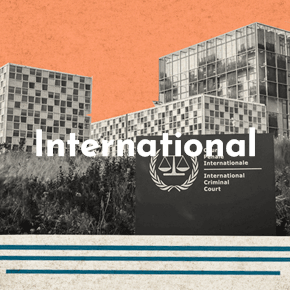
International
Quick Questions

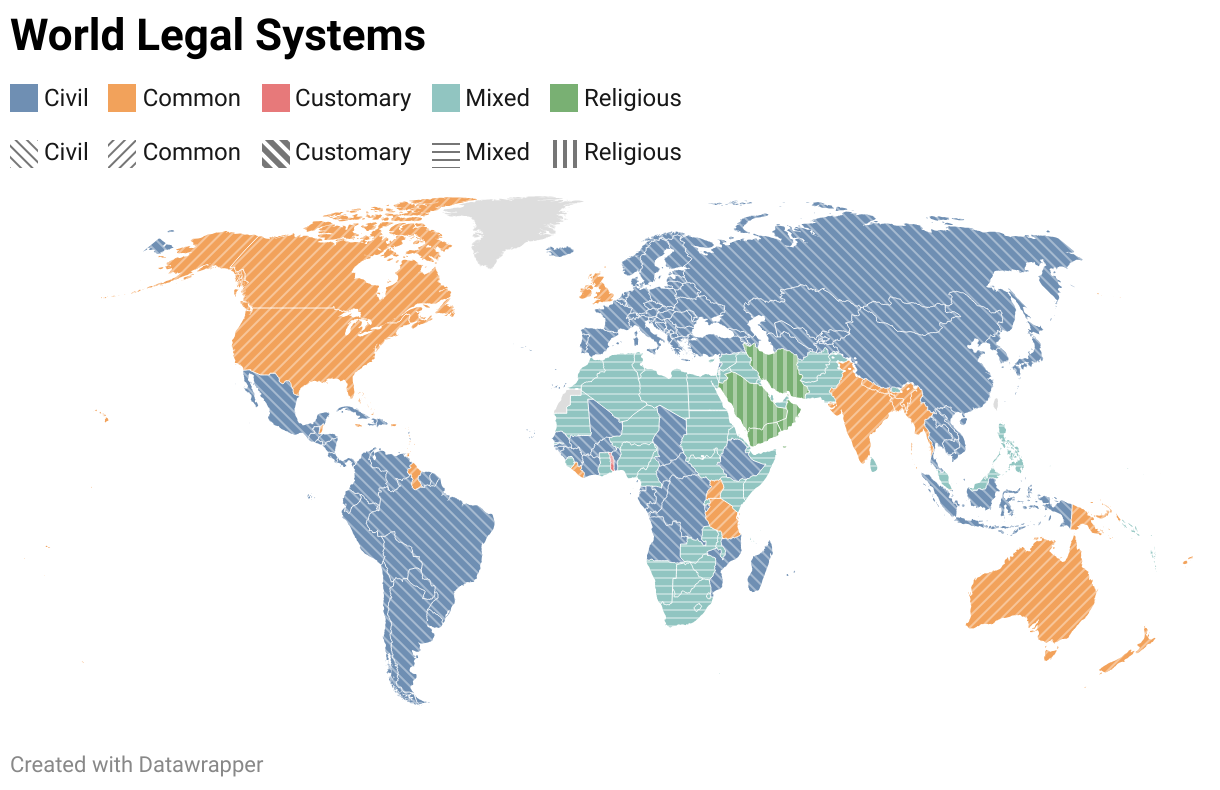
Legal Systems Around the World

Every nation has a unique legal system that reflects its history, culture, and government structure. Along with the civil and common law traditions, religious law plays a role in many parts of the world. This map offers a basic overview of the world’s judicial systems, including legal tradition, highest court, and selected features. More information about nations not included in the Country Profiles section will be added over time.

Hover over a country on the map to learn more about its legal system.
 

Recent Content

Hand reaching for legal book on the shelf
Rules of civil procedure inform the way litigation develops and proceeds through the courts. They also influence the role of judges, lawyers, and court personnel, the production and probative value of evidence, and the duration of court proceedings. The differences between legal systems can be…
"Injunctions" against a lime green banner
An injunction in civil litigation is a court order that directs a person (or entity) to do something or to stop doing something. Types of InjunctionsThere are three common types of injunctions: temporary (often called a temporary restraining order), preliminary, and…
Image of a roundtable for a Judicial Council meeting
Many countries have an entity known as a judicial council, responsible for different aspects of judicial governance, from overseeing the judicial career to promoting professional standards and court efficiency. Recent reform initiatives have focused on ensuring that judicial councils operate…