

Argentina is the second largest country in Latin America, covering most of the southern portion of the continent. Its indigenous peoples, the Diaguita in the northwest and the Guarani in the south and east, are known for their sophisticated terraced farming and irrigation, ceramics, and textiles. In 1536, Spanish explorer Pedro de Mendoza established Santa María del Buen Ayre (Buenos Aires); the settlement initially failed, was abandoned, and re-established in 1580. Spain expanded its colonial rule in the region over three centuries. In 1776 it created the Viceroyalty of Rio de la Plata, an administrative entity that included Argentina, Bolivia, Chile, Paraguay, the state of Rio Grande do Sul in Brazil, and Uruguay. Napoleon’s invasion of Spain in 1808 destabilized the country’s hold on its Latin American empire. On May 25, 1810, Argentina’s first independent government was formed. The nation declared full and formal independence in 1816.
Between 1850 and 1913, over six million Europeans settled in Argentina, drawn to the country’s economic opportunities, investments in education, and open immigration policies. Argentina’s large immigrant population significantly influenced its cultural and economic development, with foreigners outnumbering natives in some cities. During this period Argentina was among the most prosperous countries in the world; its wealth surpassed many European nations. This economic development was driven by the fertile grasslands in the east (“the Pampas”) and the country’s vast natural resources.
 Throughout much of the 20th century, Argentina cycled between democratic governments and military dictatorships. In 1943, military officer Juan Perón led a successful coup. He was elected president in 1946 and his populist movement controlled the country for the next thirty years. Perón nationalized the central bank and large portions of the economy, expanded social welfare protections, and bolstered the labor movement. However Peronism imposed a despotic and often brutal regime to contain opposition. In 1955, Perón was overthrown in a revolt led by army and navy officers. He was re-elected president in 1973 and died in office the next year. In 1976, a military junta took control of the country and imposed a repressive regime that included unlawful detentions, torture, and the “disappearance” of thousands of citizens. Democracy was restored in 1983. Argentina emerged from this turbulent period and, despite periods of economic instability, was able to create a multiparty political system with strong government institutions.
Legal System
Argentina is one of four nations in the Americas with a federal system. There are 23 provinces - independent states - and Buenos Aires, an autonomous city with its own government. Each province has a constitution, executive, legislature, and court system.
Argentina is a code-based civil law system, reflecting the influence of Spanish colonial authority. The 1871 civil code was modeled on the Spanish system as well as the French (Napoleonic) Code. In 2015, Argentina introduced a new civil and commercial code, modernizing its provisions and incorporating international human rights principles. The national constitution of Argentina was amended several times, including in 1994 when the rights of indigenous communities were explicitly recognized and changes to the presidential election system incorporated.
Sources of national law include the constitution, human rights treaties referenced in the constitution, general treaties, national codes such as the criminal code, civil code, commercial code, and federal legislation.
Argentina’s national constitution, ratified in 1853, was significantly influenced by the United States Constitution. In an effort to overcome many decades of tension between provincial and national authorities, the constitution’s drafters looked to the U.S. model of federalism to find a workable solution. Article 31 is modeled on the U.S. approach to constitutional supremacy; in 1888, Argentina’s supreme court invoked the U.S. case Marbury v. Madison to declare a law unconstitutional, exercising its power of judicial review.
The Courts
Argentina’s constitution establishes a supreme court and leaves the structure and jurisdiction of the lower national courts to the legislature. The federal court system has jurisdiction over cases involving federal law and national law (codes that apply to the entire country), the national constitution, international treaties, and disputes involving the provinces, foreign states, or their citizens. Each province creates its own court structure; provincial courts have jurisdiction over disputes involving provincial and local laws.
Federal (National) Courts
The national judiciary includes a supreme court, appellate courts, and first instance courts.
The National Supreme Court of Justice
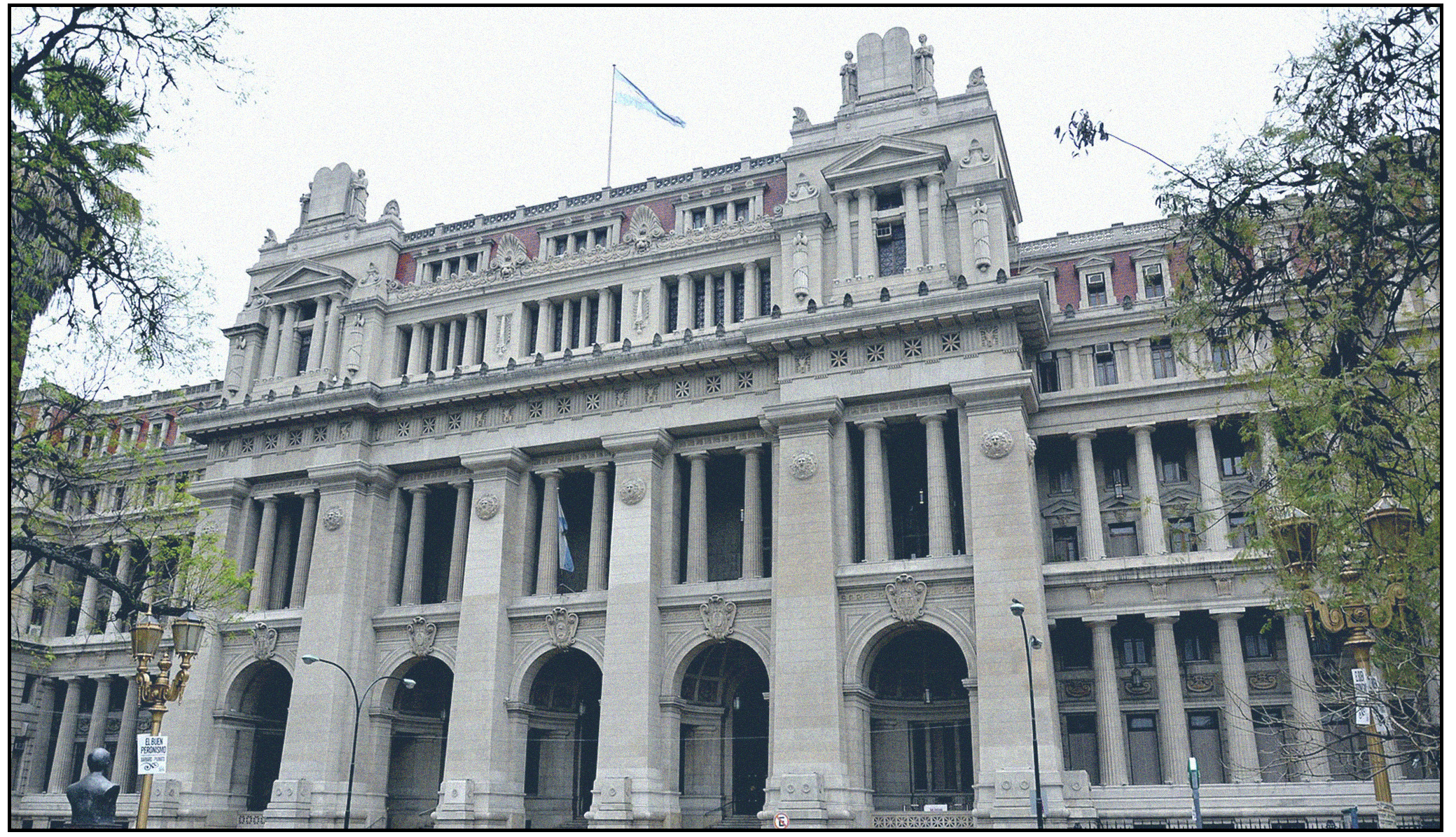 The National Supreme Court (Corte Suprema de Justicia de la Nación Argentina) is the apex court for the national judiciary and has five members, including the chief justice. The Court reviews cases from the lower national courts and has original jurisdiction over a narrow category of cases including disputes between provinces and cases involving the national government, foreign states, ambassadors, and admiralty. The National Supreme Court also hears appeals from provincial supreme court judgments that involve the constitution, a treaty, national law, or decisions the justices deem ‘arbitrary.’ Each justice has several legal secretaries who are part of the Supreme Court’s staff. The legal secretaries assist with research and drafting.
Justices are appointed by the President with the approval of the Senate. Candidates must be at least 30 years old with a law degree and a minimum of 8 years of legal or judicial experience. National Supreme Court justices serve until the mandatory retirement age of 75 when they can be reappointed for an additional five-year term. The Chief Justice is selected by the other members of the Court to a four-year term.
Courts of Appeal
The Courts of Appeal review questions of law and procedural challenges. There are 24 appellate courts located across the country. Judges on the court sit in specialized panels (or, in some regions, separate specialized appellate courts) to review civil, commercial, criminal, labor, administrative and social security appeals. Cases are heard by panels of three judges.
Courts of First Instance
Argentina’s first instance national courts are located in 17 jurisdictions across the country. They adjudicate serious criminal cases including national crimes such as drug trafficking, corruption, and terrorism as well as constitutional questions and disputes involving national entities. Cases are heard by a single judge.
National Judicial Council
Argentina’s National Judicial Council oversees administrative matters for the national judiciary including allocating the resources assigned to the judiciary’s budget by the legislature and issuing rules to improve court performance. It is also responsible for the appointment, discipline, and removal of national judges. The Council was created in 1994 as part of a series of constitutional reforms. Its members include representatives of the judicial, executive, and legislative branches, as well as the bar and academia. The Council currently has 20 members. In 2006, the president of Argentina removed the Supreme Court President from the Council and reduced its size to 13 members; in 2022, the Supreme Court ruled that this was unconstitutional, restored the Council’s membership to 20, and reinstated the Supreme Court president as Council Chair.

Judicial Selection and Tenure: National Judges
The appointment of lower court judges is coordinated by the Judicial Council. A public competitive selection process includes an exam, background check, and interview. Many applicants come from the courts’ staff; they are referred to as “natural candidates.” Applicants for positions on first instance courts must be at least 25 years old, have a law degree, and four years legal experience. Candidates for the courts of appeal must be at least 30 years old with six years of legal or judicial experience.
The Judicial Council sends the President a list of three nominees for each position. The President’s selection must be confirmed by a two-thirds vote of the Senate. Judges have life tenure with a mandatory retirement age of 75.
Provincial Courts
Each province in Argentina has its own court system with variations in structure that reflect local needs and culture. All provinces have a supreme court, appellate courts, and first instance courts that hear criminal and civil cases arising under state law such as family law matters, commercial cases, and provincial-level contract disputes. In some provinces the courts have general jurisdiction, with judges hearing a broad range of cases; other provinces have specialized courts for different types of disputes such as labor and social security. The provincial justice systems also have local courts with ‘judges of the peace.’ The jurisdiction of local courts (both subject matter and geographic) varies province to province.
First instance cases in the provincial courts are heard by a single judge. Most appeals are heard by a panel of three judges. The number of justices on provincial supreme courts is determined by the province’s constitution.
Judicial Selection and Tenure: Provincial Judges
The judicial selection process is set forth in the constitution and laws of each province. The appointment process varies somewhat throughout the country but most involve participation by the provincial judicial counsel, appointment by the executive, and approval by the legislature. Similarly, each provincial judicial system sets its own mandatory retirement age for judges.
Administrative Courts
As with the courts of general jurisdiction, there are two administrative court systems in Argentina: national and provincial. The administrative courts adjudicate disputes between the citizens and the national government/province, including matters involving taxes, consumers rights, and public servants.
The Courts of the City of Buenos Aires
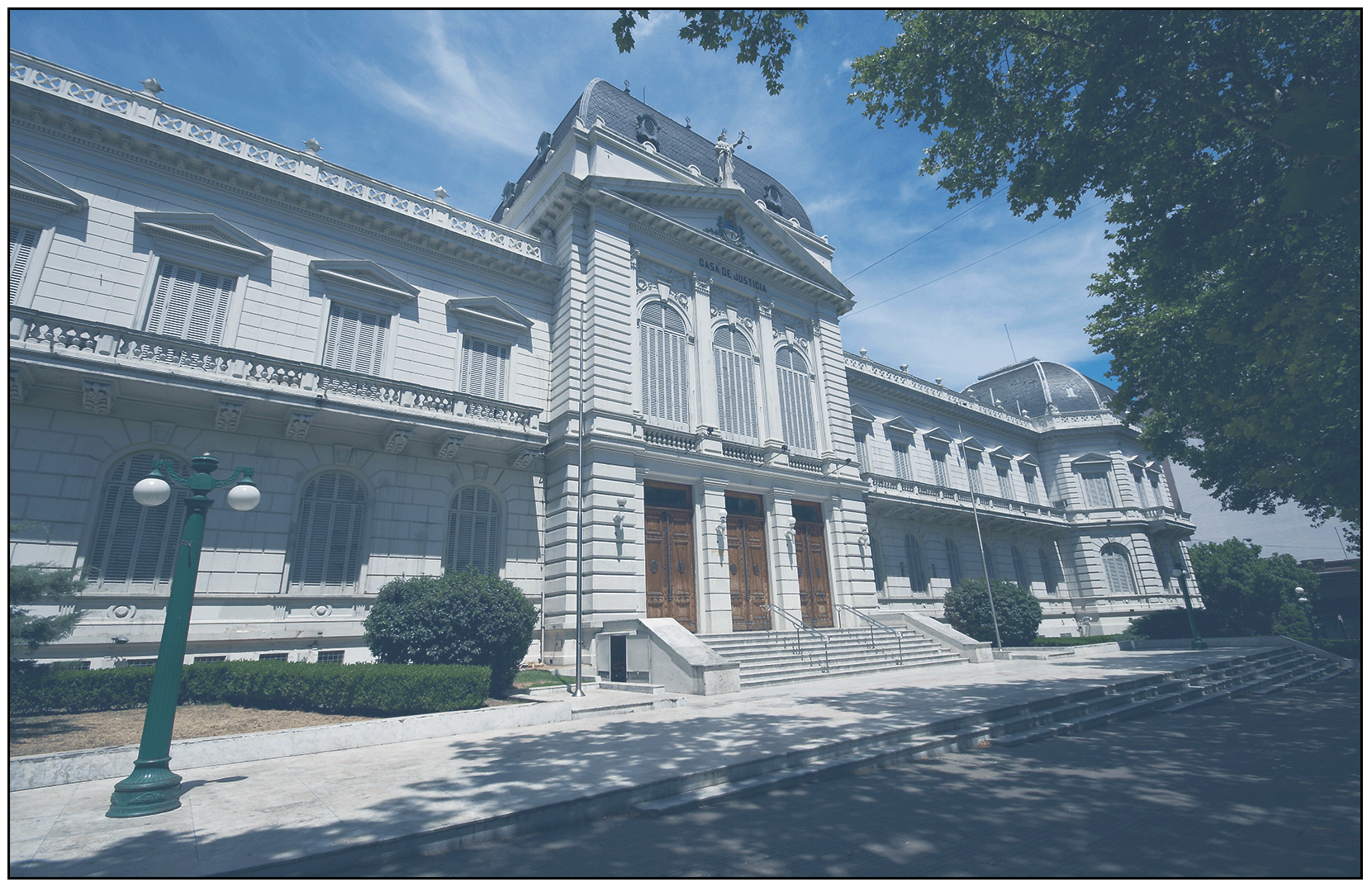
The City of Buenos Aires (CABA), the capital of Argentina and home to one third of its population, is an autonomous federal territory with local and national courts. CABA is not part of the province of Buenos Aires. The National Courts in CABA hear criminal, civil, commercial, and labor matters. The apex national court is the National Court of Appeals. CABA local courts hear non-national claims including misdemeanor criminal offenses, tax and administrative matters, labor cases, social security, and consumer relations. The apex local court is the Superior Court of Justice. The existence of these parallel court systems sometimes results in jurisdictional conflicts at the local and national levels. For example, an August 2025 decision of Argentina’s National Supreme Court held that the CABA (local) Superior Court of Justice can review decisions of the lower CABA national courts.
Jury Trial
Although Argentina’s 1853 constitution empowered Congress to enact legislation authorizing trial by jury, this authority was not exercised for over 150 years. The significant delay was in part a reflection of Argentina’s European-influenced inquisitorial justice model. Beginning in the early 2000’s, a number of provinces in Argentina adopted legislation and criminal code provisions authorizing jury trials in serious criminal cases and a limited number of civil cases. The first jury trial took place in 2004 in the province of Córdoba. Half of Argentina’s provinces and the City of Buenos Aires now hold jury trials for criminal cases. Most provincial laws provide for twelve jurors, a jury selection process with voir dire and peremptory challenges, and juror unanimity. Every provincial jury must have gender parity and include indigenous participation. Jury trials are not currently used in the national courts.
Transition to Adversarial Criminal Justice Procedures
As is the case in most of Latin America, Argentina historically followed an inquisitorial criminal justice model with the judge assuming an active role in gathering evidence. Most litigation was paper based, with more limited oral hearings and evidence introduced in the courtroom. In 1992, Argentina amended its National Code of Criminal proceedings to adopt a mixed inquisitorial/adversarial system. While oral proceedings were introduced into the trial process, the judge retained investigative authority. Beginning with the province of Tucumán in 1992, many of Argentina’s provincial justice systems began to institute the adversarial model. These reforms were designed to increase the efficiency of the criminal justice system and enable compliance with international human rights standards mandating public, oral, adversarial proceedings.

In 2014, a new national law was passed abandoning the mixed system and adopting a fully adversarial criminal justice model, including transferring investigative authority to the prosecutor; another law was passed in 2015 to structure this transition process. A similar transition to the adversarial justice system is underway throughout Latin America including in Chile, Colombia, Costa Rica, Ecuador, El Salvador, Honduras, and parts of Mexico.
Amparo
The writ of amparo provides for summary legal proceedings addressing violations of fundamental rights. It extends to acts or omissions by public authorities, private entities, or individuals. The writ of amparo is recognized in many Latin American countries. It was introduced in Argentina by a 1958 Supreme Court decision and was later codified in the 1994 constitution. The writ of amparo assigns courts broad authority. Judicial rulings may enjoin conduct deemed unlawful and provide for equitable remedies. Amparo actions have been brought against government entities for failure to prevent environmental harm, demands for access to healthcare, and challenges to the decisions of public agencies.