

The French Republic (France) sits between the Atlantic Ocean and Mediterranean Sea. Reflecting its history as a colonial power, France also includes the island of Corsica as well five overseas departments such as Martinique and Guadeloupe and 13 territories, including New Caledonia and French Polynesia. Although the official language is French, regional languages are spoken in some parts of the country. During the first millennium BC, France was settled by Celtic tribes (known as the Gauls) and later occupied by the Greeks, Romans, and Carthaginians. Over the centuries, the region was divided and re-united repeatedly. Clovis I, considered to be the nation’s founder, converted to Catholicism in 496, and in 800, Pope Leo III crowned French King Charlamagne Emperor of the Holy Roman Empire. Charlamagne expanded the reach of the Frankish empire into Western and Central Europe and led reforms in the fields of law, public administration, and education. After his death, the country was divided again, with West Francia becoming the Kingdom of France. France developed as a cultural center during the Middle Ages and into the Renaissance, with a decentralized feudal economy of nobles and peasants.
The intellectual and cultural ideals of the Enlightenment inspired the French Revolution of 1789. The overthrow of the ancien régime brought an end to feudalism and introduced liberal democratic values and institutions. General Napolean Bonaparte became first consul of the republic and after a series of military victories, was declared Emperor. Over the course of his ten-year tenure, Napoleon imposed increasingly authoritarian policies and conducted military and empire building campaigns throughout Europe. After Napoleon’s exile to Elba in 1815, ongoing political upheaval led to the French Revolution of 1848. An extended period of relative stability, referred to as La Belle Époque, ended on August 3, 1914, when Germany declared war on France. By the conclusion of WWI, over two million French citizens were killed or grievously wounded. During WWII, Germany invaded France again, dividing the country into the Nazi-occupied north and Vichy France. General Charles de Gaulle led the French Resistance and Free French government in exile from London. After the war, much of France had to be rebuilt. In 1958, de Gaulle established the Fifth Republic whose constitution and government institutions remain in place today. In the 1990’s France played a key role in the creation of the European Union.
Legal System
 France has a “semi-presidential” system of government. The President is the head of state and elected by direct universal suffrage; the President selects the Prime Minister, usually from the majority party of parliament. Parliament is comprised of the National Assembly and the Senate.
French law follows a strict hierarchy, with the constitution at the apex. The constitution incorporates the 1789 Declaration of the Rights of Man and of the Citizen, a document drafted during the French Revolution. Other sources of law include institutional acts (special laws related to government functions, including elections), ordinary acts (those passed by the parliament), ordinances (measures passed by the government related to operations), and regulations issued by the executive. As is the case with most civil law systems, there is a strict conceptual divide between private law (related to individuals or corporations) and public law (governing the state, public administration, and disputes between the state and individuals).
Legal System
France has a “semi-presidential” system of government. The President is the head of state and elected by direct universal suffrage; the President selects the Prime Minister, usually from the majority party of parliament. Parliament is comprised of the National Assembly and the Senate.
French law follows a strict hierarchy, with the constitution at the apex. The constitution incorporates the 1789 Declaration of the Rights of Man and of the Citizen, a document drafted during the French Revolution. Other sources of law include institutional acts (special laws related to government functions, including elections), ordinary acts (those passed by the parliament), ordinances (measures passed by the government related to operations), and regulations issued by the executive. As is the case with most civil law systems, there is a strict conceptual divide between private law (related to individuals or corporations) and public law (governing the state, public administration, and disputes between the state and individuals).
French Civil Code
France’s civil law system had a significant impact on the development of law around the world. Many countries, including those that were not French colonies, based their legal systems on the Napoleonic Code. Created in 1804 upon the orders of Emperor Napoleon Bonaparte, the French Civil Code unified existing fragmentary laws to create a coherent system of reason-based, predictable rules. The code was organized topically (civil, family, property, succession, labor) and written in a manner accessible to lay people.
Court System
The French judicial system is divided into ordinary courts that hear civil and criminal cases and administrative courts that preside over disputes between citizens and public bodies and disputes between two or more public bodies. The independent Constitutional Council is considered a court but is not technically part of the judiciary; it reviews the constitutionality of legislation. While the French constitution references a court system and describes the Constitutional Council, the organization and jurisdiction of French courts are set forth in legislation.
Ordinary Courts
First Instance
Civil disputes are heard either by a regional court, district court, or specialized court, depending upon the subject of the dispute and the amount in controversy. Criminal cases are heard by a district court or regional court; felonies are heard by Cours d’assises.
Serious felonies, with a potential sentence in excess of ten years, are heard by a panel of three professional judges and six lay jurors. Sentences are issued by a majority (five votes) but the maximum sentence can only be issued by six votes. There is a separate Cours d’assises for cases involving terrorism and drug trafficking that is composed of only professional judges.
Courts of Appeal
There are 36 courts of appeal in the country that review both questions of fact and law. Most cases are reviewed by a panel of three judges.
Appeals of jury verdicts (for serious felonies) trigger a second (new) trial. The facts of the case are re-heard by a panel of three judges and nine (instead of six) newly selected jurors at a jury court of appeal (cour d’assises d’appel).
Court of Cassation
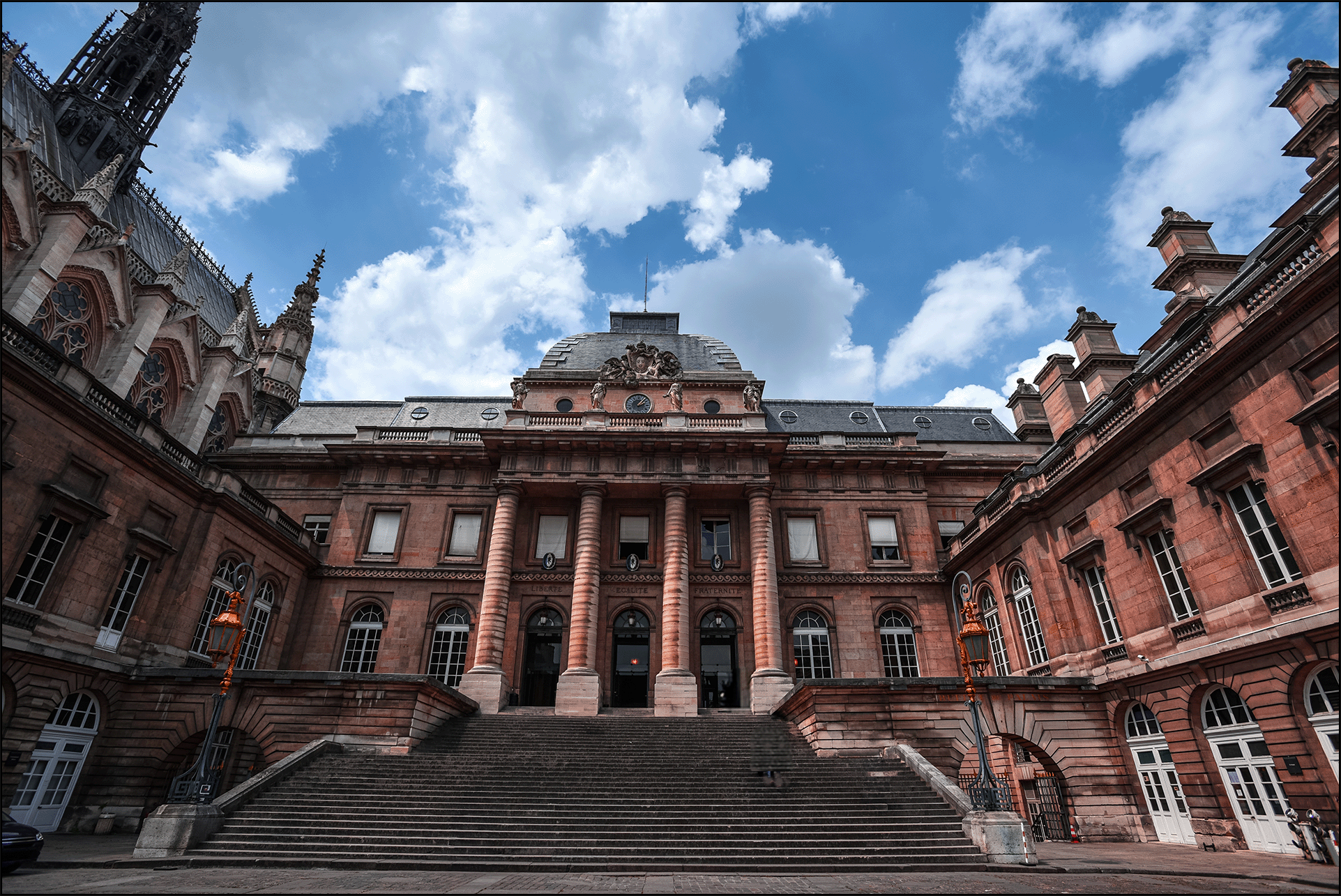
The Court of Cassation is the apex court and reviews whether the law was applied correctly by lower courts. The Court may be asked to issue an advisory opinion on the interpretation of a law, independent of its application in a dispute. The Court of Cassation has three civil chambers and three additional chambers for criminal, commercial and labor cases. Each chamber has two sections. Less complicated cases are heard by panels of three judges and more complex cases by panels of five. All nineteen members of the court sit together to review cases deemed of significant public importance. The Court of Cassation has an Office of the Prosecutor; its Chief Prosecutor is independent of the Ministry of Justice and advises the Court on the application of law.
Court of Cassation
The Court of Cassation is the apex court and reviews whether the law was applied correctly by lower courts. The Court may be asked to issue an advisory opinion on the interpretation of a law, independent of its application in a dispute. The Court of Cassation has three civil chambers and three additional chambers for criminal, commercial and labor cases. Each chamber has two sections. Less complicated cases are heard by panels of three judges and more complex cases by panels of five. All nineteen members of the court sit together to review cases deemed of significant public importance. The Court of Cassation has an Office of the Prosecutor; its Chief Prosecutor is independent of the Ministry of Justice and advises the Court on the application of law.
Specialized Tribunals
The Ordinary Court system also has specialized tribunals including a labor court and tribunals for cases involving agriculture and social security. There are also specialized courts of minor jurisdiction such as the police courts that hear cases involving traffic violations and simple assaults.
Administrative Courts
France has a three-tier system of administrative courts with jurisdiction over disputes between citizens and public bodies and between two public bodies. These cases include disputes involving public liberties, the administrative police, taxes, public contracts, public health, environmental law, urban development, and the civil service. There are 42 first instance administrative tribunals, eleven of which are overseas in French territories, and eight administrative courts of appeal.
Council of State (Conseil d’Êtat)
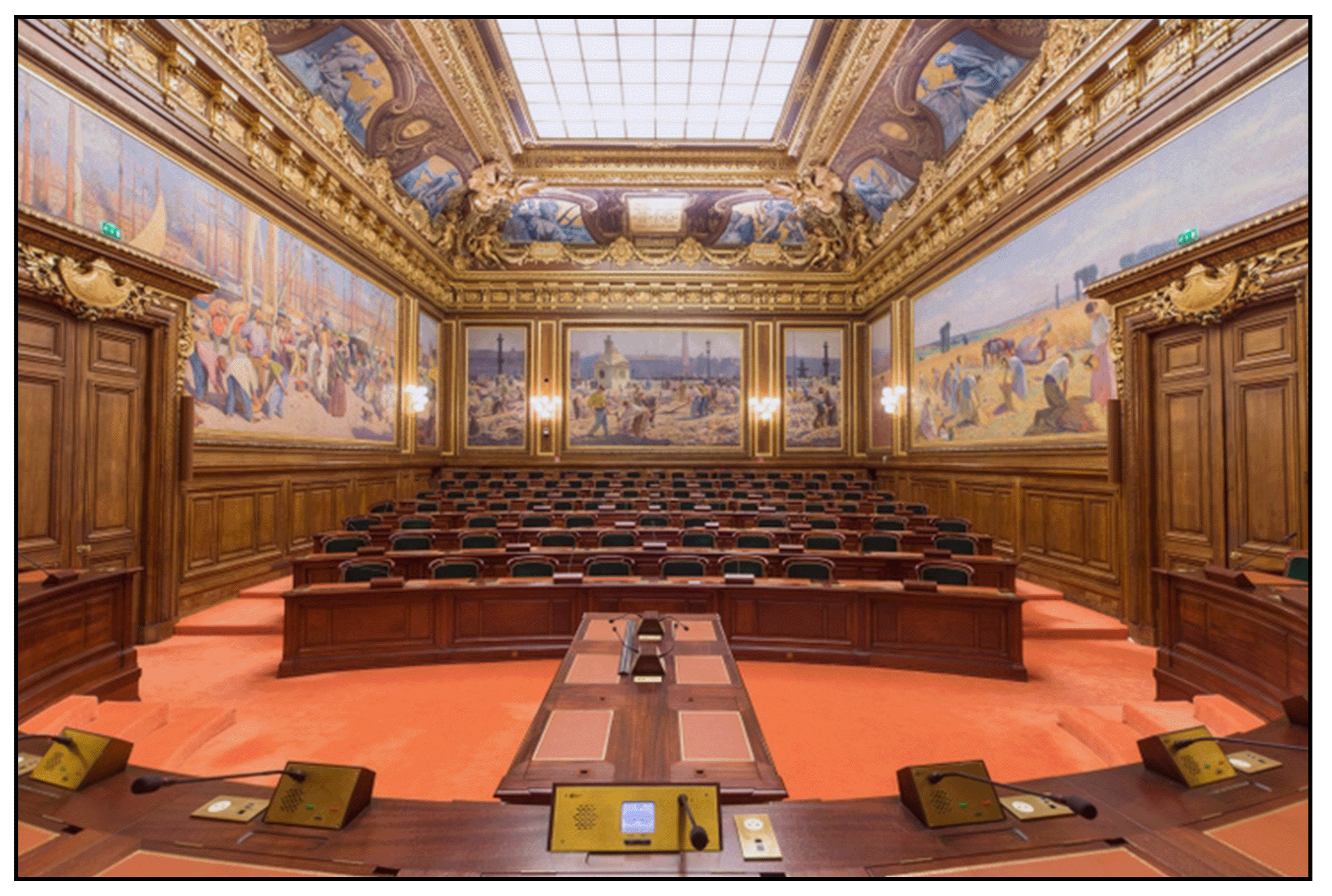 The Council of State, established in 1302, plays a central role in the French legal system. It is the apex court for administrative justice and is responsible for the day-to-day management of the administrative court system. Approximately two-thirds of its cases are final appeals from the lower administrative courts. The Council is the first and last instance tribunal for disputes involving regulatory actions by national authorities, elections to regional councils, and the European Parliament. The Council of State also serves as an advisor to the government on legislation, ordinances, and decrees as well as legal questions. The Council of State is empowered to conduct studies related to administrative justice and public policy, at the government’s request or on its own initiative.
The Council of State has 300 members who are recruited either through a competitive exam or external appointment. Top graduates of the National School of Administration are eligible for an initial appointment as an auditor and then promoted through the ranks until achieving the position of Conseiller d’État. Promotion is based upon seniority. One out of every four available positions are filled by external candidates nominated by the Council’s Vice President. Council members may serve in the litigation or advisory department or be assigned outside the Council to assist the President, Prime Minister, or a cabinet member. Conseiller d’État may be seconded to an international tribunal or may leave for the private sector for a designated period of time.
Council of State (Conseil d’Êtat)
The Council of State, established in 1302, plays a central role in the French legal system. It is the apex court for administrative justice and is responsible for the day-to-day management of the administrative court system. Approximately two-thirds of its cases are final appeals from the lower administrative courts. The Council is the first and last instance tribunal for disputes involving regulatory actions by national authorities, elections to regional councils, and the European Parliament. The Council of State also serves as an advisor to the government on legislation, ordinances, and decrees as well as legal questions. The Council of State is empowered to conduct studies related to administrative justice and public policy, at the government’s request or on its own initiative.
The Council of State has 300 members who are recruited either through a competitive exam or external appointment. Top graduates of the National School of Administration are eligible for an initial appointment as an auditor and then promoted through the ranks until achieving the position of Conseiller d’État. Promotion is based upon seniority. One out of every four available positions are filled by external candidates nominated by the Council’s Vice President. Council members may serve in the litigation or advisory department or be assigned outside the Council to assist the President, Prime Minister, or a cabinet member. Conseiller d’État may be seconded to an international tribunal or may leave for the private sector for a designated period of time.
The Conflicts Tribunal, Tribunal des Conflits, hears cases that raise potential jurisdictional conflicts between France’s ordinary and administrative court systems. This court has eight members selected for three-year terms. The Minister of Justice presides over proceedings and the tribunal’s decisions cannot be appealed.
Constitutional Council
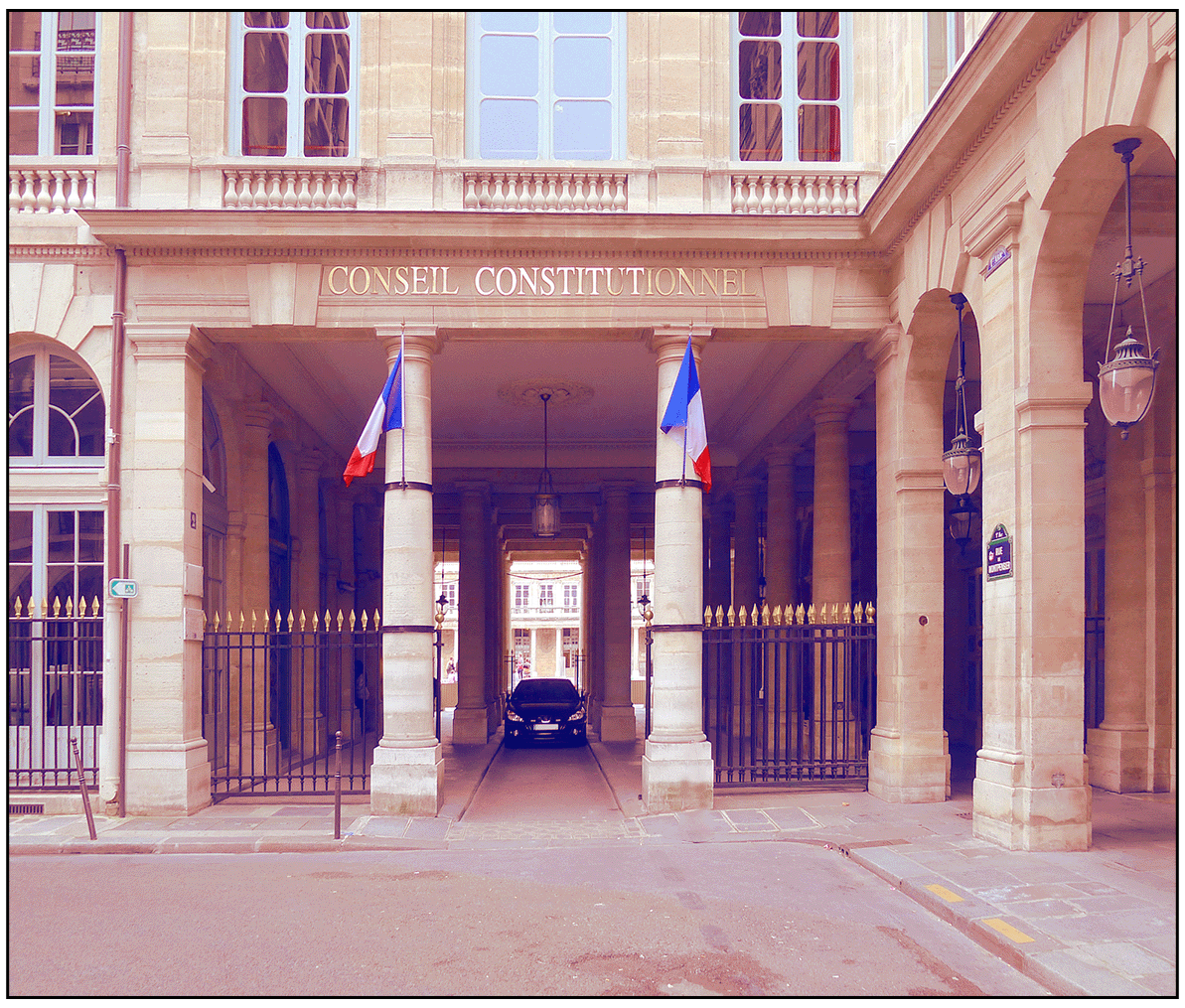 Created by the 1958 Constitution, the Constitutional Council is an independent body responsible for reviewing the constitutionality of legislation. Council review may take place before a law is enacted upon the request of the President, Prime Minister, or the President of the National Assembly or Senate. Sixty members of the National Assembly or Senate may also petition for review of proposed legislation. Preliminary rulings on the constitutionality of proposed legislation must be completed within three months.
A 2008 constitutional amendment vested the Constitutional Council with authority to review the constitutionality of laws that are already in effect upon referral from the Council of State or Court of Cassation. Individual parties cannot submit a petition directly to the Council. However, if they believe a law infringes upon a constitutional right, individuals may request that the Council of State or Court of Cassation seek Council review of the law’s constitutionality.
The Constitutional Council supervises presidential and parliamentary elections and reviews the legitimacy of certain types of referenda. It also serves in a consultative role: the Head of State may request that the Council assess whether the imposition of Article 16 of the Constitution (emergency powers) are justified.
The Constitutional Council has nine judges who serve a single nine-year term. Three are appointed by the National Assembly, three by the president (after approval by parliament), and three by the president of the senate. Former heads of State are eligible to sit on the Constitutional Council as long as they are not also serving as a government official. The Council reviews petitions as a plenary and decisions must be issued by at least seven members. Its deliberations and votes are not made public. Most proceedings are conducted in writing, however parties may request oral argument.
Constitutional Council
Created by the 1958 Constitution, the Constitutional Council is an independent body responsible for reviewing the constitutionality of legislation. Council review may take place before a law is enacted upon the request of the President, Prime Minister, or the President of the National Assembly or Senate. Sixty members of the National Assembly or Senate may also petition for review of proposed legislation. Preliminary rulings on the constitutionality of proposed legislation must be completed within three months.
A 2008 constitutional amendment vested the Constitutional Council with authority to review the constitutionality of laws that are already in effect upon referral from the Council of State or Court of Cassation. Individual parties cannot submit a petition directly to the Council. However, if they believe a law infringes upon a constitutional right, individuals may request that the Council of State or Court of Cassation seek Council review of the law’s constitutionality.
The Constitutional Council supervises presidential and parliamentary elections and reviews the legitimacy of certain types of referenda. It also serves in a consultative role: the Head of State may request that the Council assess whether the imposition of Article 16 of the Constitution (emergency powers) are justified.
The Constitutional Council has nine judges who serve a single nine-year term. Three are appointed by the National Assembly, three by the president (after approval by parliament), and three by the president of the senate. Former heads of State are eligible to sit on the Constitutional Council as long as they are not also serving as a government official. The Council reviews petitions as a plenary and decisions must be issued by at least seven members. Its deliberations and votes are not made public. Most proceedings are conducted in writing, however parties may request oral argument.
The Judicial and Prosecutorial Career and Tenure
 Prosecutors in France are considered part of the judiciary. Prosecutors and judges may alternate between the two professions throughout their career. The majority of candidates for both services participate in a national written exam. Those who pass the exam proceed to a 2 ½ year training program at the National School for the Judiciary. Prospective judges and prosecutors undertake the same initial curriculum; they specialize during the second half of their studies. Judges who successfully complete the examination and training process are formally appointed by the president of France.
There is a second route to judicial appointment: the High Council of the Judiciary has authority to propose candidates for the Court of Cassation and leadership positions in the lower courts.
Judicial tenure is constitutionally protected but there is a mandatory retirement age of 67, with judges in certain leadership positions serving until the age of 68. Prosecutors must retire at 67.
Lay Participation in Court Proceedings
The practice of lay participation in adjudicating disputes dates back to early French history. After the French Revolution new laws were introduced reforming the criminal justice system, including reforms to lay-involvement in court proceedings: an eight-person grand jury and twelve-person trial jury for felonies. Jurors were drawn from the citizenry, though only “notable” men were deemed eligible for service. Beginning in 1941, France adopted a mixed system in which citizens and professional judges hear serious criminal cases. Three professional judges sit with nine jury members selected from the electoral lists of residents from the municipality where the case is being heard. France also uses a “mixed court” of professional and lay judges for some types of civil disputes including labor, commercial, and welfare law cases. In 2005, reforms to Juvenile Court proceedings included the introduction of a mixed panel of lay and professional judges; cases are heard by one juvenile court judge, two lay judges, and a court clerk.
High Council for the Judiciary
 The High Council for the Judiciary is sometimes referred to as the guardian of judicial independence. It is an autonomous, constitutionally created entity with jurisdiction over judges and prosecutors. The High Council’s judicial section works closely with the Ministry of Justice on matters related to the judicial career, including conduct and discipline. It proposes appointments to the Court of Cassation, first presidents of the courts of appeal, and presidents of the lower courts. The High Council also has authority to accept or reject judicial candidates proposed by the Ministry of Justice. The High Council’s Prosecution Section issues non-binding opinions on Ministry of Justice candidates for the prosecution service.
The High Council is responsible for promulgating the judicial ethics code and has authority to issue sanctions against judges. It meets in plenary session to review complaints related to the conduct of judges submitted by the Minister of Justice, court presidents, or litigants.
The High Council is composed of judges and public prosecutors who serve four-year terms that may be renewed but cannot run consecutively. Members include six judges, six prosecutors, the President of the Court of Cassation, the Prosecutor of the Court of Cassation, a representative from the Council of State and the National Bar Association, and six appointees designated by the executive and legislature.
Specialized Judges and Court Staff
While most criminal cases in France are investigated by police with oversight by prosecutors, the investigation of major and complex crimes is led by a Juge d’instruction, Investigating Judge, who reports to the Court of Appeals. Investigating judges do not have the authority to initiate a criminal investigation; they proceed at the request of either a prosecutor or crime victim and are assisted by the judicial police.
The Juge de l’exécution, Enforcement Judge, oversees the application of criminal sentences, petitions regarding prison conditions, the parole process, and post-release reintegration into society. The Juge des Libertés et de la Détention, Liberty and Detention Judge, reviews challenges to the liberty of individuals, including the arrest process and pretrial detention. The position of Juge des contentieux de law protection, Protection Dispute Judge, was introduced in 2020 to oversee proceedings involving vulnerable people including guardianship issues, consumer credit, and disputes involving rent disputes.
The French judiciary has a specialized officer of the court called the greffier. This official works in the court’s registry office and serves a number of administrative functions. The greffier maintains official court records, certifies judicial documents, manages evidence, and facilitates the court’s interactions with victims and the accused.
Judicial Administration
The Ministry of Justice has administrative authority over the judicial system. The Ministry is responsible for court personnel, buildings, developing justice sector policy related to the courts, and may propose laws and regulations. The Ministry’s Judicial Services Directorate oversees the administrative and organizational needs of the courts. The Criminal Matters and Pardons Directorate drafts guidelines for criminal court rules and criminal justice policy. The Inspectorate-General of Judicial Services reviews court performance.
Court presidents in the French judiciary have significant oversight authority. They are responsible for annual performance assessments of the judges in their courts, case assignment, court administration matters.
